


News center
Electric Vehicle Agency: Electric Vehicle Knowledge Points
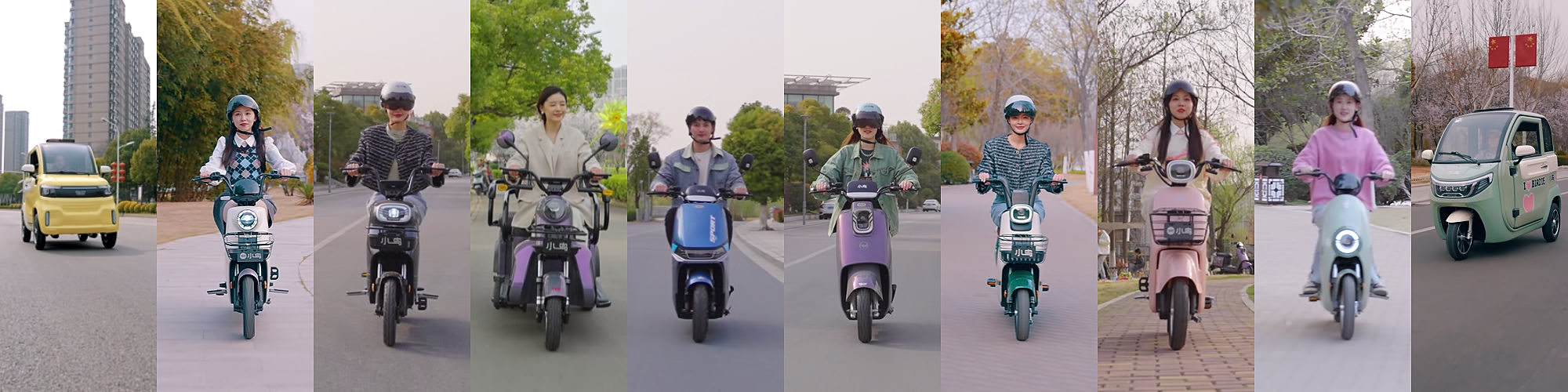
Electric Vehicle Agency The manufacturer states that electric vehicles are electrically powered vehicles. Currently, the main types include electric bicycles, electric two-wheeled motorcycles, electric three-wheeled vehicles, electric three-wheeled motorcycles, electric four-wheeled vehicles, and electric battery vehicles. Electric vehicles use two types of power: one is powered by an external power cord, and the other uses a battery as power. So, what is the basic structure of our commonly used electric bicycles?
Electric bicycles consist of five parts: the vehicle body, the electric drive device (motor), the rechargeable battery, the charger, and the control system. Different types of vehicles have different battery placement and control methods.
1. Vehicle body: Since the national standard stipulates that the maximum speed of electric bicycles is 20 km/h, there are no special requirements for the vehicle body, generally the same as bicycles, with manual riding function.
2. The electric vehicle agency manufacturer indicates that the electric drive device (motor): Electric bicycles have three electric drive methods: friction drive; central shaft drive; electric hub drive. Currently, most electric bicycles in China use electric hub drive, which has the advantages of small size, light weight, low energy consumption, and high efficiency. Motors are divided into brushless motors and brushed motors. Brushless motors are mainly low-speed, high-torque motors without transmission gears, avoiding mechanical wear and tear. They are almost noiseless in operation, but brushless motors have a large impact on starting current, and the control system structure is complex. Hub brushed motors use advanced technology to improve brush life, high motor efficiency, and a simple electronic circuit control system.
3. Rechargeable battery: Electric bicycles mainly use three types of batteries: small sealed maintenance-free lead-acid batteries, nickel-cadmium batteries, and nickel-metal hydride batteries. Small sealed maintenance-free lead-acid batteries are low in cost and have a large capacity, and are widely used by domestic enterprises.
4. Charger: The charger design uses a constant current, constant voltage, and trickle charge three-stage automatic switching mode to protect the battery and effectively extend its lifespan.
5. Control system: The control system design has multiple protection functions such as power display, wireless speed control, soft start, undervoltage protection, overcurrent protection, and braking power-off. It protects the motor and battery, allowing the current to be output in a controlled manner, generating the required power without burning the motor. Most domestically developed electric bicycles currently use a manual speed control handle to determine the power supply method.
Electric bicycle chargers generally use switch-mode power supply chargers, which are divided into two-stage charging mode and three-stage charging mode.
The electric vehicle agency manufacturer indicates that the two-stage charging mode is constant voltage charging, dividing the charging process into two stages: constant current charging and constant voltage charging. The charging current gradually decreases as the battery voltage increases. When the battery capacity rises to a certain level, it will charge at a constant voltage, and the voltage inside the battery will slowly rise. When the battery voltage reaches the charging termination voltage of the charger (different charging modes have different voltages; the termination voltage of the multi-stage charging mode is generally 41.4V, and the constant voltage charging mode is generally 43.8~44.4V), it will use trickle charging, also known as float charging, which can effectively protect the battery and extend its service life. Electric vehicles generally use a three-stage charging method.
Electric vehicle agency
News
+86 022-86995911
Bonnie:15868923063
WhatsApp:15868923063
Email:61316570@qq.com
.
All rights reserved©2025 Tianjin Bird Car Industry Co., Ltd.